Hair Transplant Techniques - FUE, Sapphire FUE and DHI Compared
Hair transplant techniques differ in how grafts are extracted, how channels are opened and how grafts are placed. This guide compares FUE, Sapphire FUE, DHI and no-shave FUE stage by stage, with the Garry instrument each one uses, its sizes and order codes, and how clinics combine them.
Hair transplant techniques are told apart by 3 stages of the same procedure, how the grafts are extracted, how the recipient channels are opened and how the grafts are placed. FUE takes each graft out with a punch, opens the channels with a steel blade or needle and places the grafts with forceps. Sapphire FUE keeps that sequence and opens the channels with a sapphire blade. DHI keeps punch extraction and places each graft with an implanter pen that opens the site in the same motion. No-shave FUE, also called long hair or unshaven FUE, leaves the donor hair long and works with a punch designed for it. This guide compares the 4 techniques from the instrument side, stage by stage, names the Garry instrument each one uses with its published sizes and order codes, and explains how clinics combine them in one case. The choice of technique for a patient belongs to the surgeon, so the guide stays with what changes on the instrument table.
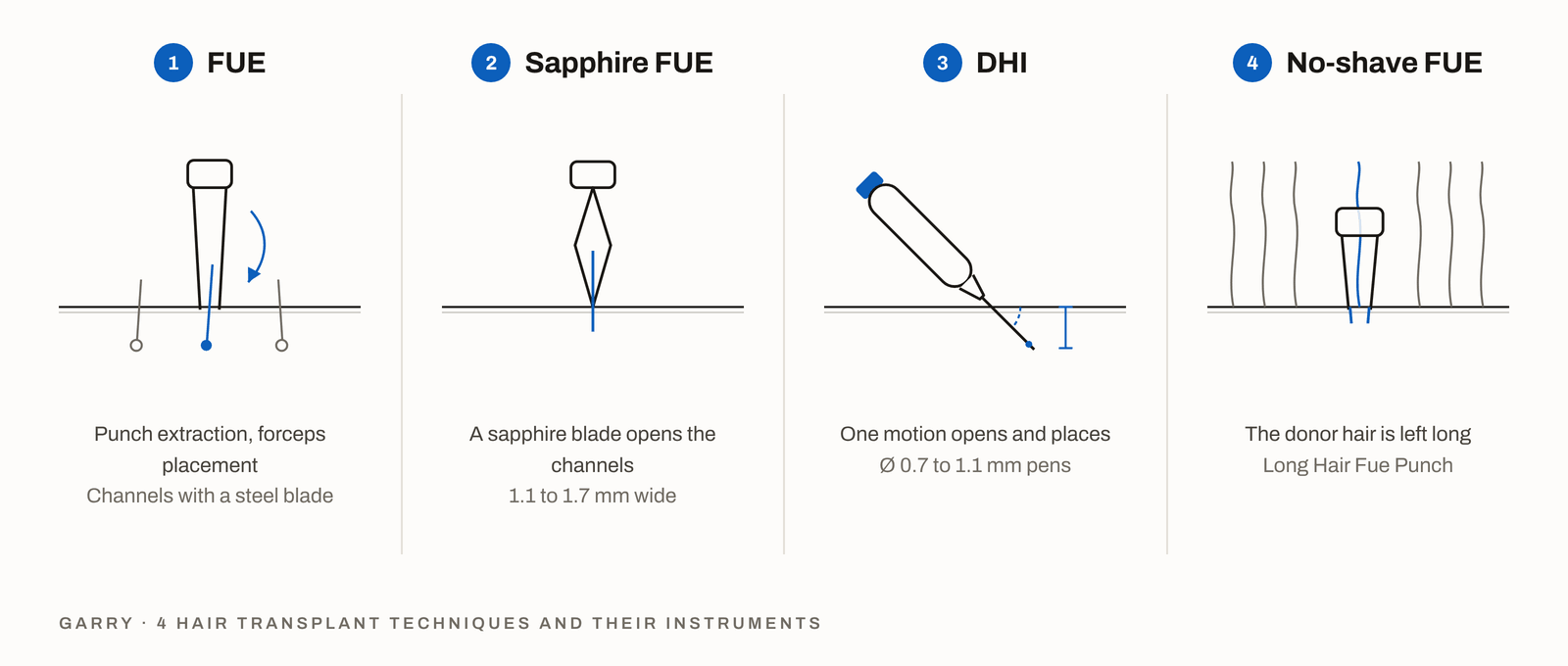
The 4 hair transplant techniques at a glance
Every technique in the table moves follicular units from the donor area to the recipient area. What separates them is the instrument that does each stage of that work.
| Technique | Extraction | Channel opening | Placement | Donor area | Garry instruments |
|---|---|---|---|---|---|
| FUE | Punch, by hand or motorized | Steel blade or needle, before placement | Forceps, into the opened channels | Shaved | Fue Punch |
| Sapphire FUE | Punch, by hand or motorized | Sapphire blade, before placement | Forceps, into the opened channels | Shaved | Fue Punch, Sapphire Blade |
| DHI | Punch, by hand or motorized | Implanter pen, in the same motion as placement | Implanter pen | Shaved, or long with a long hair punch | Fue Punch, DHI Implanter Pen and Needle |
| No-shave FUE | Long hair punch, the hair left long | Blade or implanter pen, as the plan sets | Forceps or implanter pen | Not shaved | Long Hair Fue Punch, with a blade or an implanter pen |
Read across the rows and a pattern appears. Every technique starts with punch extraction, and the names mostly describe what happens after it. Sapphire FUE names the material of the channel blade, DHI names a placement method, and no-shave FUE names the state of the donor area. The techniques are combinations of instruments, and a clinic can run more than one of them, even within the same case. Our guide to what FUE is covers the base procedure in detail.
FUE, the base technique
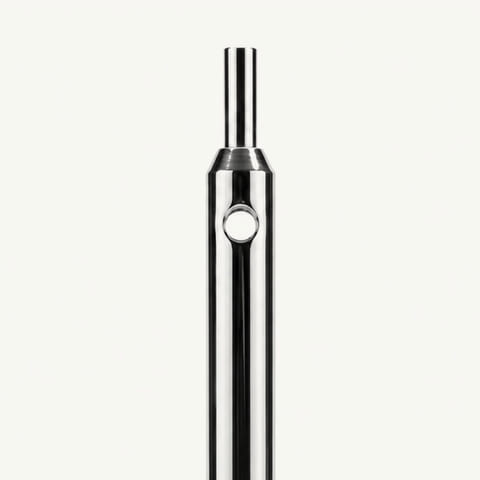
Follicular unit extraction, FUE, is the technique the others build on. The surgeon scores the skin around one follicular unit at a time with a punch, and the graft is lifted out with fine forceps. The grafts are sorted, often under a microscope, and kept in a holding solution while the recipient channels are opened with a steel blade or needle. The grafts are then set into those channels with forceps, one by one.
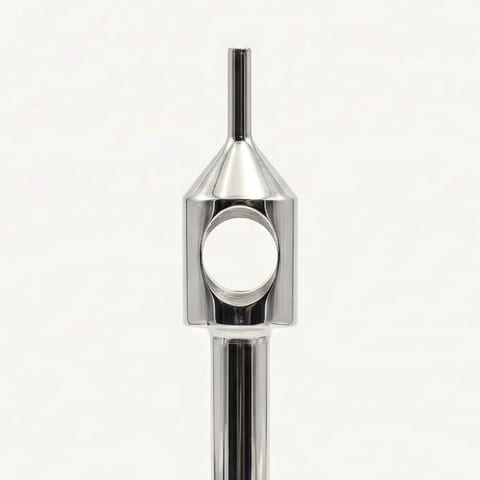
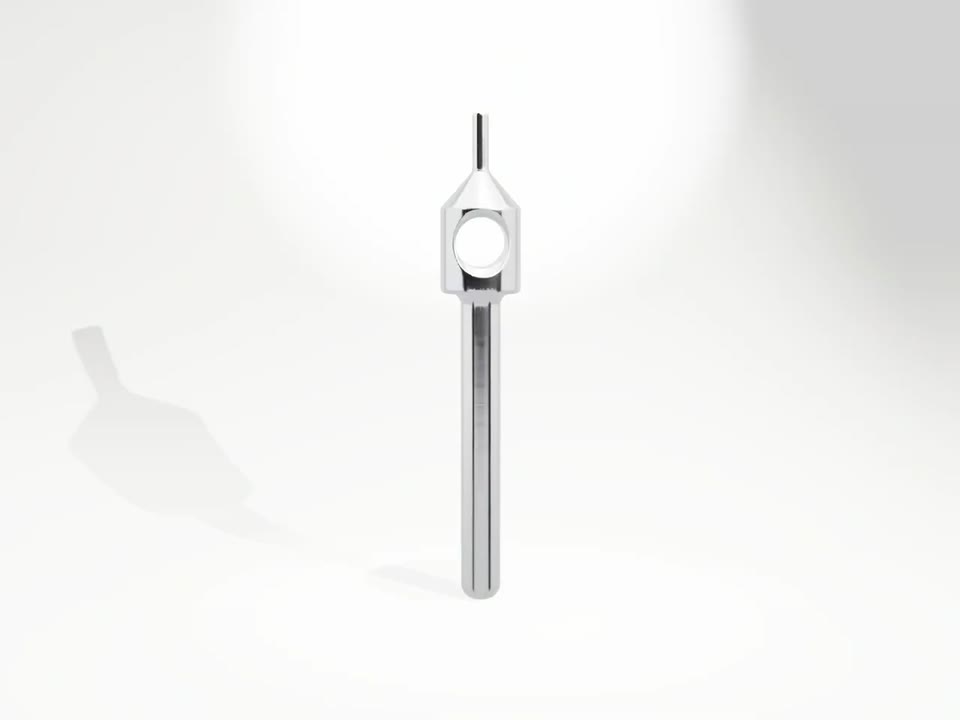
The punch is the instrument that defines FUE, and its size is 2 figures. The inner diameter is matched to the caliber of the grafts, and the working length is the part of the punch that enters the skin. The Garry Fue Punch is made in 7 inner diameters, Ø 0.60, 0.65, 0.70, 0.75, 0.80, 0.85 and 0.90 mm, each in 5 working lengths, 2.5, 3.0, 3.5, 4.0 and 5.0 mm. That makes 35 order codes from PCH-060-25 to PCH-090-50, each its own catalog entry, for example the Garry Fue Punch 0.8 mm - 4.0 mm, order code PCH-080-40. The punch has a serrated cutting tip and is crafted from Japanese Steel (Garry J-Steel). The line is on the Fue Punch page, and our punch size guide explains how a diameter and a working length are chosen.
The smallest diameters of that range are what clinics usually mean by micro FUE, a variation of the same technique with finer punches, as our guide to micro FUE explains.
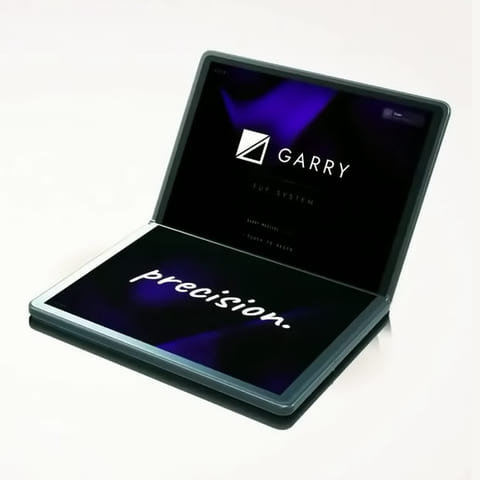
Manual and motorized extraction. A punch can be turned by hand or driven by a motorized system. The technique stays FUE either way, and the choice between the 2 belongs to the clinic and the surgeon. Our guide to manual and motorized FUE compares them. For motorized work Garry makes its own device, the Garry Smart Fue System, with a dual screen, 3D donor planning and 4 motion types, continuous rotation, oscillation, vibration and short rotation, that can be combined into modes of your own. Its configuration, handpiece and accessories are confirmed on the quotation.
Sapphire FUE, the channel opening stage changes
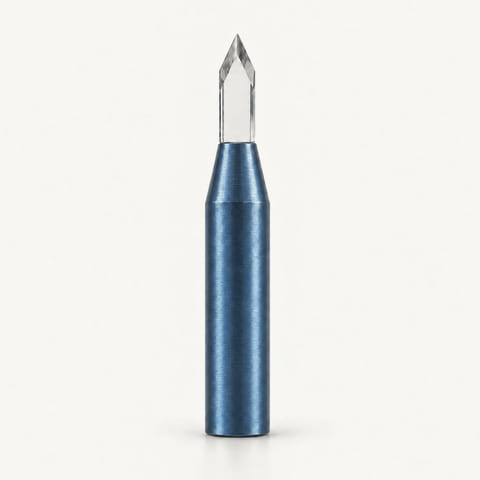
Sapphire FUE is FUE with one instrument swapped. Extraction uses the same punches, placement uses the same forceps, and the surgical plan does not change. The difference is the blade that opens the recipient channels, a blade ground from sapphire crystal instead of steel. Our comparison of Sapphire FUE and standard FUE walks through what that swap alters and what stays the same, and the sapphire and steel blade guide compares the 2 materials.
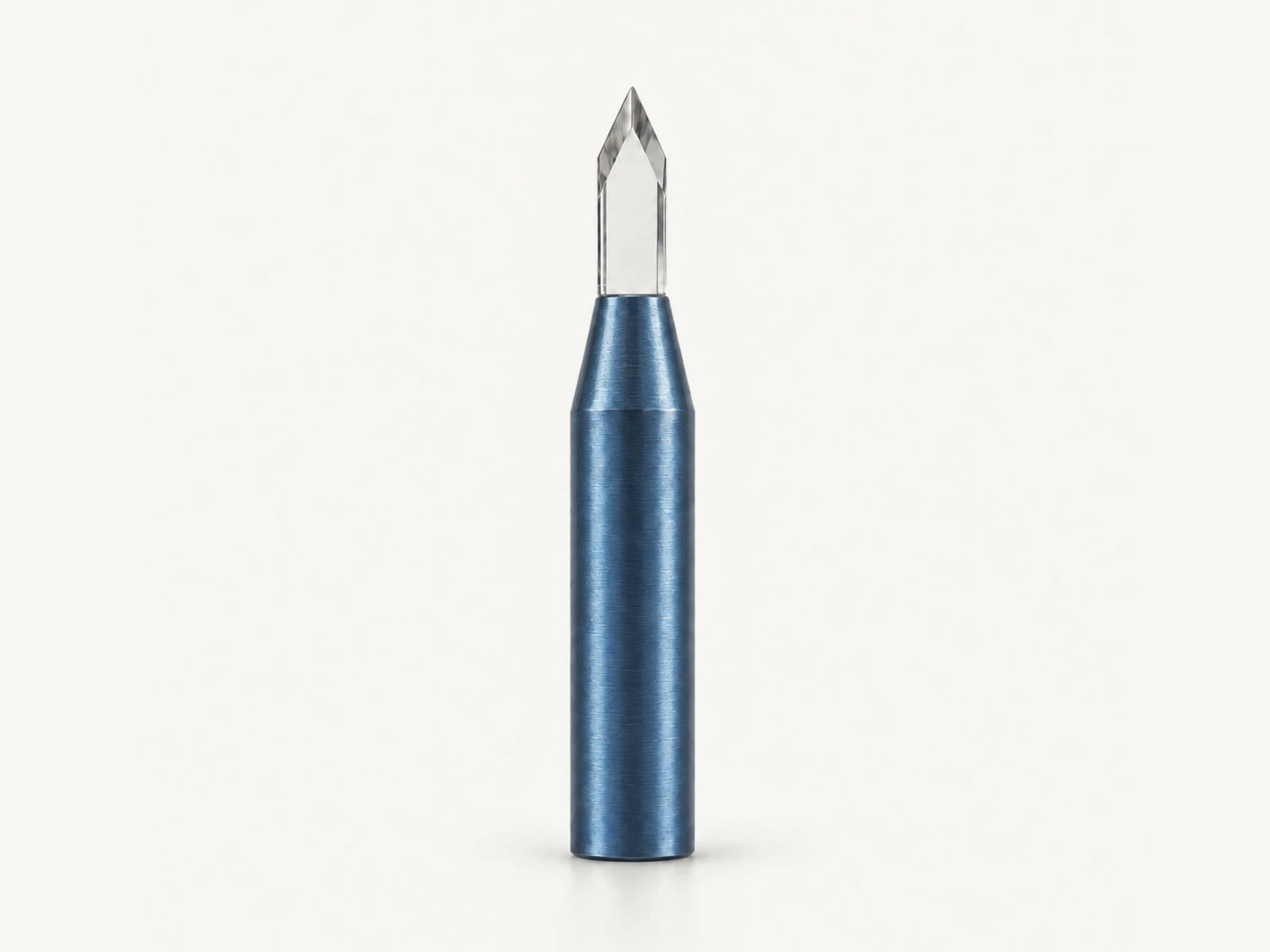
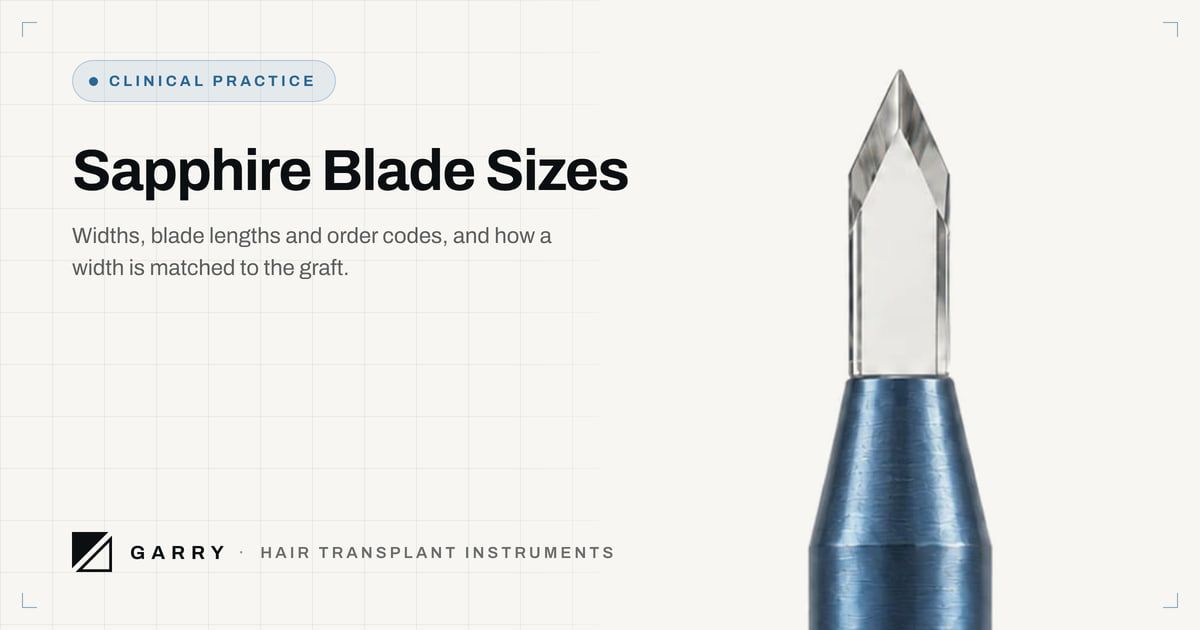
In Sapphire FUE the channels are opened before placement, so the channel blade sets the angle, direction and density of the recipient sites that the grafts will later fill. The blade width is matched to the graft caliber. The Garry Sapphire Blade is made in 7 widths, 1.1 to 1.7 mm in steps of 0.1 mm, and every width comes in 4 blade lengths, 4.0, 4.5, 5.0 and 5.5 mm. That makes 28 order codes, from SF-110-40 to SF-170-55, where the first digits give the width and the last the blade length, as in the Garry Sapphire Blade 1.3 mm - 4.5 mm, order code SF-130-45. The clinic chooses the blade length. The blade is reusable and is designed for a total of up to 30,000 channel openings.
The blade is mounted in a blade holder, the handle that gives the grip and sets the exposed depth. Blade holders are not part of the Garry range, so the holder is sourced separately, and the fit of the blade in the holder a clinic uses is confirmed on the quotation. Our guide to sapphire blade sizes explains the widths, the lengths and the codes in full, and the Sapphire Blade page lists them.
DHI, channel opening and placement in one motion
DHI, direct hair implantation, keeps punch extraction and changes how the grafts go in. Instead of opening every channel first and placing the grafts afterwards with forceps, the surgeon places each graft with an implanter pen, and the needle of the pen opens the site in the same motion. The work runs in 3 steps.
- Loading. A technician sets the extracted graft into the hollow needle of the pen.
- Entry. The surgeon brings the needle into the skin at the planned angle and depth, which opens the site.
- Release. The spring-loaded plunger releases the graft as the needle withdraws, and the graft stays seated in the site the needle has just made.
Because loading and placing are separate jobs, a typical DHI setup runs several pens in rotation, with technicians loading the next pens while the surgeon places with another. Our guide to DHI hair transplantation follows the 3 steps in detail, and the DHI and FUE comparison sets out what changes on the instrument table.
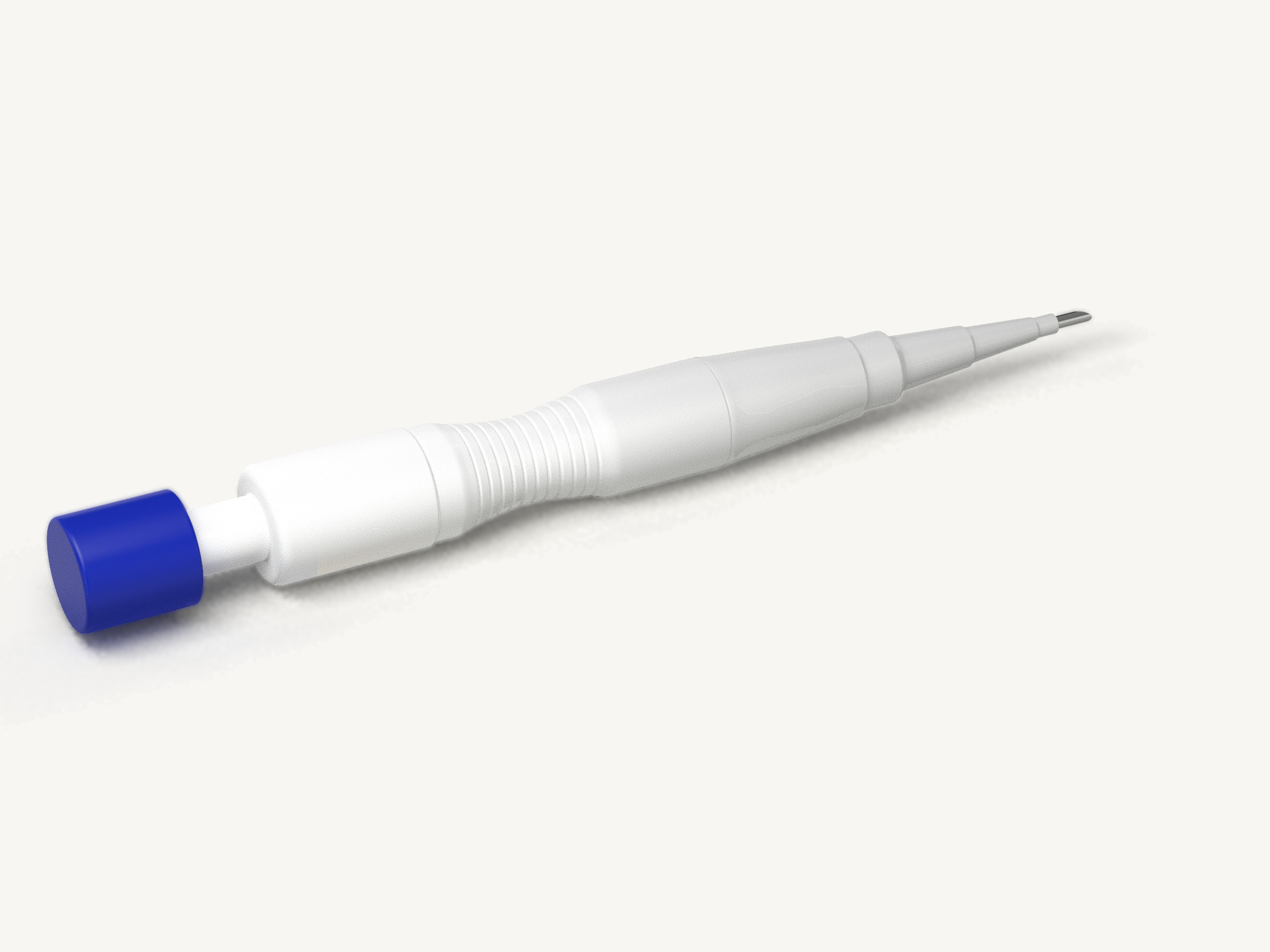
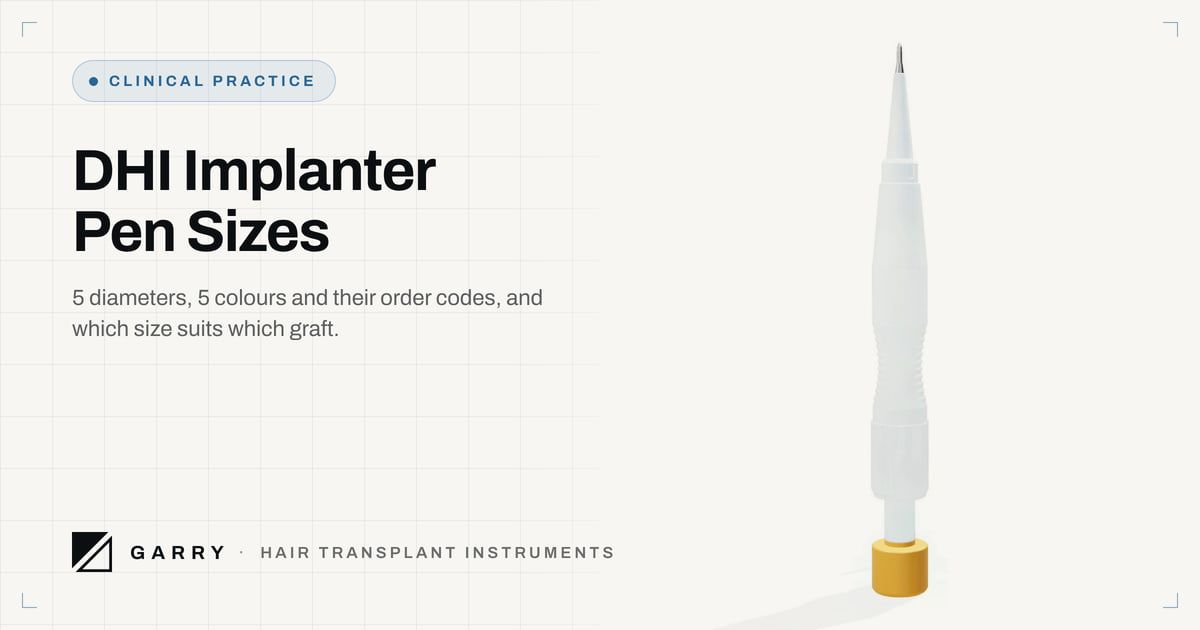
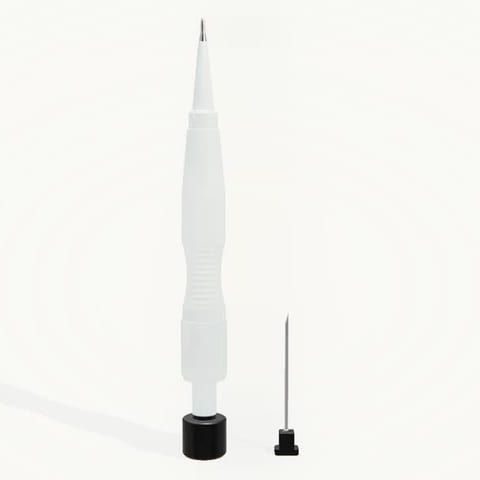
The Garry DHI Implanter Pen is made of medical-grade steel with a spring-loaded plunger, a positive needle seat and an adjustable needle depth. It takes the Garry DHI Implanter Needle, crafted from Japanese Steel (Garry J-Steel). Pens and needles come in 5 sizes, Ø 0.7, 0.8, 0.9, 1.0 and 1.1 mm, and each size has one colour, yellow, blue, red, white and black, on the pen cap and on the needle hub, so a loaded pen can be recognised at a glance during a session. The order codes run from DHI-PEN-070 to DHI-PEN-110 for the pens and from DHI-TIP-070 to DHI-TIP-110 for the needles, for example the Garry DHI Implanter Pen 0.9 mm and its needle. The needle bore is matched to the graft caliber, the needle is reusable and is designed for up to 15,000 penetrations before the tip dulls, and replacement needles are ordered by their DHI-TIP code. The DHI Implanter page and the DHI Implanter Needle page list every size.
No-shave FUE, extraction with the hair left long
No-shave FUE, which clinics also call long hair FUE or unshaven FUE, changes the state of the donor area rather than an instrument stage. The donor area is not shaved, each follicular unit keeps its hair, and the punch has to score around a unit whose hair shaft stays in its lumen during excision. That is a different task for the cutting tip, so the technique works with a punch designed for long hair. Our guide to long hair FUE explains how the extraction proceeds.
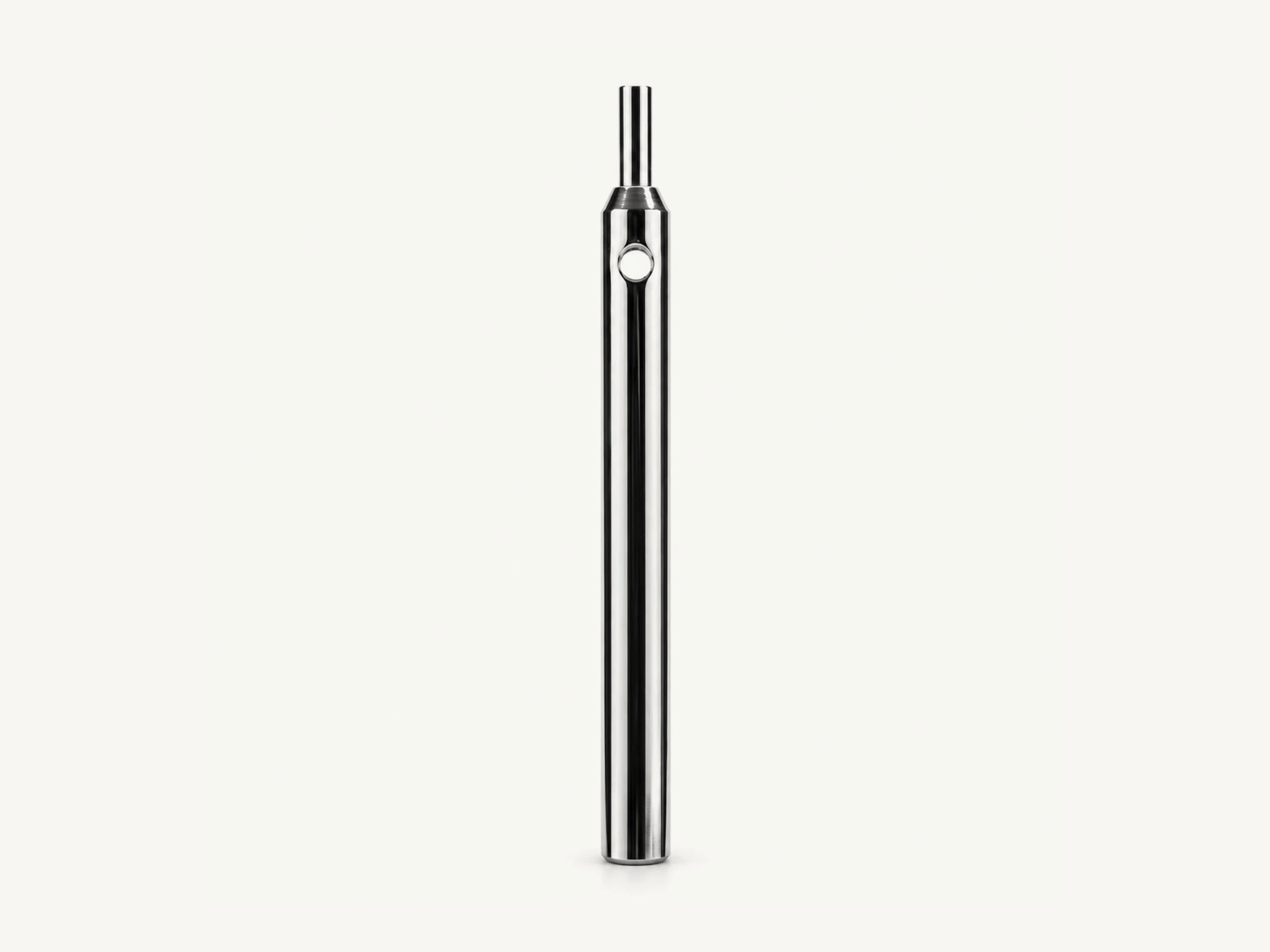
The Garry Long Hair Fue Punch has a cutting tip designed for long hair and comes in 3 inner diameters, Ø 0.80, 0.85 and 0.90 mm, at a 4.0 mm working length, order codes LPCH-080-40, LPCH-085-40 and LPCH-090-40, for example the Garry Long Hair Fue Punch 0.85 mm. The rest of the case follows the plan. The channels can be opened with a sapphire blade and the grafts placed with forceps, or the grafts can be placed with implanter pens. The Long Hair Fue Punch page lists the 3 sizes.
Sapphire FUE vs DHI
Sapphire FUE and DHI are the 2 techniques compared most often, because both are named after the instrument that works at the recipient area. They answer the same question in 2 different ways.
| What you compare | Sapphire FUE | DHI |
|---|---|---|
| Extraction | Fue Punch | Fue Punch |
| How the sites are opened | Sapphire blade, all channels before placement | Implanter needle, one site at a time |
| How the grafts are placed | Forceps, into the opened channels | Implanter pen, as the site is opened |
| Sizing | Blade width by graft caliber | Needle bore by graft caliber |
| Garry sizes | 1.1 to 1.7 mm wide, 4 blade lengths | Ø 0.7 to 1.1 mm, one colour per size |
| Order codes | SF-110-40 to SF-170-55 | DHI-PEN-070 to 110, DHI-TIP-070 to 110 |
| Team rhythm | Channel opening, then a placement team with forceps | Technicians load pens while the surgeon places |
| Also needed | Blade holder, forceps | Several pens in rotation, replacement needles |
| Reprocessing habit | Blade handled by its mount, kept from metal | Pen sterilized disassembled, needle lumen flushed |
The main difference is the order of work. In Sapphire FUE the recipient area is prepared first, and placement follows into channels that already exist. In DHI each site is made and filled in one motion, so the angle and depth are set at every entry of the pen. Neither order is better in general. They suit different plans, different team structures and different surgeon preferences, and many clinics keep both on the shelf. The 2 can also run in the same case, for example DHI at the hairline and sapphire channels for the larger area behind it, when the surgeon plans it that way.
Matching the sizes across techniques
Whatever the technique, the sizes of the instruments follow the caliber of the grafts. The table below sets out the published Garry sizes side by side as a starting point. The final sizes follow the clinic's own graft calibers and the plan of its surgeons, and a real case usually runs 2 or 3 sizes of each instrument.
| Graft type | Fue Punch inner diameter | DHI needle bore | Sapphire Blade width |
|---|---|---|---|
| Finest single-hair units | Ø 0.60 to 0.65 mm | Ø 0.7 mm, yellow | 1.1 mm |
| Fine single-hair grafts | Ø 0.70 mm | Ø 0.8 mm, blue | 1.1 to 1.2 mm |
| Mixed follicular units | Ø 0.75 to 0.80 mm | Ø 0.9 mm, red | 1.3 to 1.4 mm |
| Fuller multi-hair units | Ø 0.85 mm | Ø 1.0 mm, white | 1.5 mm |
| Multi-hair units and coarse calibers | Ø 0.90 mm | Ø 1.1 mm, black | 1.6 to 1.7 mm |
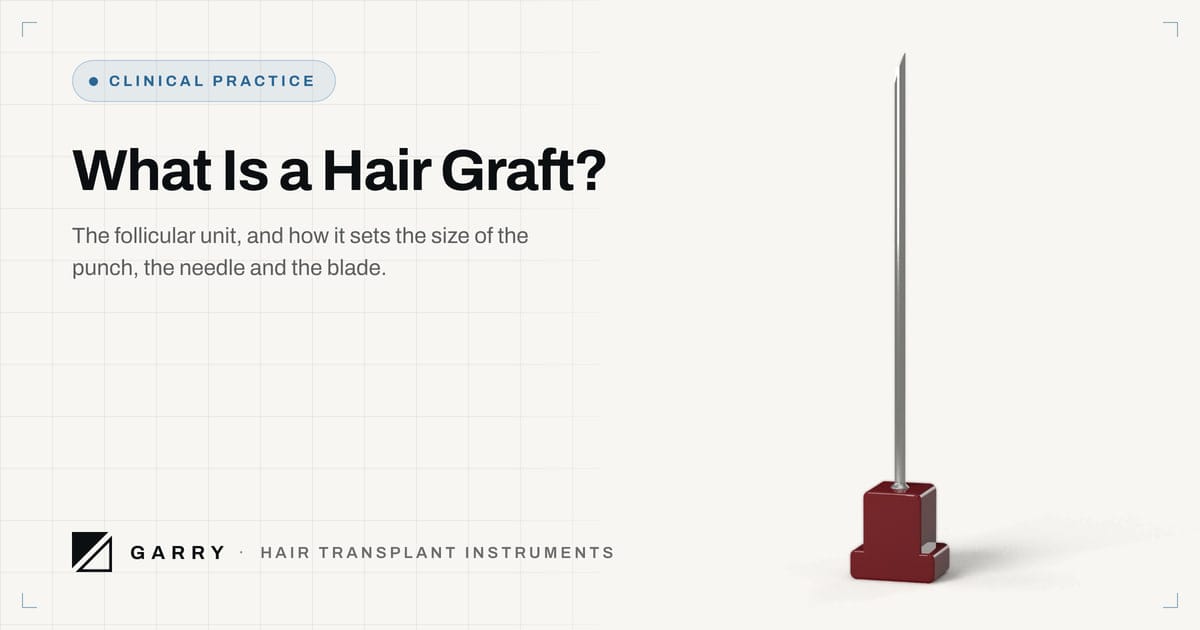
Our guide to what a hair graft is explains how the graft caliber links the 3 instruments.
Combining techniques in one case
Because the techniques are combinations of instruments, a clinic does not have to choose one for every patient. A few combinations show how the instrument table follows the plan.
- FUE with sapphire channels. Fue Punch extraction, sapphire blade channels, forceps placement. The instrument list is a set of punch sizes, a set of blade widths and the holders.
- FUE extraction with DHI placement. Fue Punch extraction and implanter pens for placement. The list is a set of punch sizes, the pens in rotation and their needles.
- Mixed placement by zone. DHI at the hairline and sapphire channels behind it, when the surgeon plans it. Both lists are on the table.
- No-shave with either placement. Long Hair Fue Punch extraction, then sapphire channels with forceps or implanter pens.
- Manual or motorized extraction with any of them. The extraction method is a separate choice from the channel and placement method.
Every published size has its own order code, so each combination can be written as a list of codes, for example PCH-080-40 and PCH-090-40, SF-130-45 and SF-140-45, DHI-PEN-080 and DHI-PEN-090 with DHI-TIP-080 and DHI-TIP-090. The online catalog lists every size and code on one page, and our guide to hair transplant tools shows how to build a starter set from them.
Questions clinics ask about hair transplant techniques
Which hair transplant technique is best? No technique is best for every case. The techniques differ in the instrument that opens the sites and places the grafts, and the choice for a patient belongs to the surgeon, who weighs the donor area, the plan and the team.
What is the difference between FUE and DHI? Both use punch extraction. In FUE the channels are opened first and the grafts placed with forceps, and in DHI an implanter pen opens each site and places the graft in one motion.
Is Sapphire FUE a different technique from FUE? It is FUE with a different channel blade. Extraction and placement stay the same, and the channels are opened with a sapphire crystal blade instead of a steel one.
What is the difference between Sapphire FUE and DHI? Sapphire FUE opens all the channels with a sapphire blade and places the grafts afterwards with forceps. DHI opens and fills each site in one motion with an implanter pen.
Can no-shave FUE be combined with DHI? Yes. The donor hair is left long and the grafts are extracted with a long hair punch, and the placement can be done with implanter pens or with forceps into opened channels, as the plan sets.
Do the techniques use different punches? FUE, Sapphire FUE and DHI use the same punches, chosen by inner diameter and working length. No-shave FUE uses a punch with a cutting tip designed for long hair.
Ordering instruments for each technique
Tell us which techniques your clinic runs, or send the order codes and quantities you need, through the contact page, and we answer in writing within 24 hours on business days, with a suggested set for each technique where you ask for one. Pricing is provided by quotation and is not published on the public site, and the minimum order per code, the lead time and the shipping terms are confirmed on the quotation. The instruments are supplied direct from the manufacturer in Türkiye, the full range is on the instruments page, and distributors who want to carry the line can apply for a dealer account.