Hair Transplant Tools - The Instruments Stage by Stage
Hair transplant tools follow the 4 stages of a procedure. This guide names the instrument for extraction, channel opening, placement and reprocessing, the Garry Fue Punch, Long Hair Fue Punch, Sapphire Blade and DHI Implanter Pen and Needle, with sizes and order codes, and a starter set.
Hair transplant tools follow the 4 stages of a procedure. A punch extracts each graft from the donor area, a blade opens the recipient channels, an implanter pen or a pair of forceps places the grafts, and between sessions every reusable instrument is cleaned, inspected and steam sterilized. This guide walks through those stages one by one, names the Garry instrument made for each of the first 3, the Fue Punch, the Long Hair Fue Punch, the Sapphire Blade and the DHI Implanter Pen and Needle, with their published sizes and order codes, describes the equipment a clinic sources from other suppliers, and closes with how to build a starter set from order codes. Pricing and pack details are left to the quotation, and every size named here is a published catalog entry.
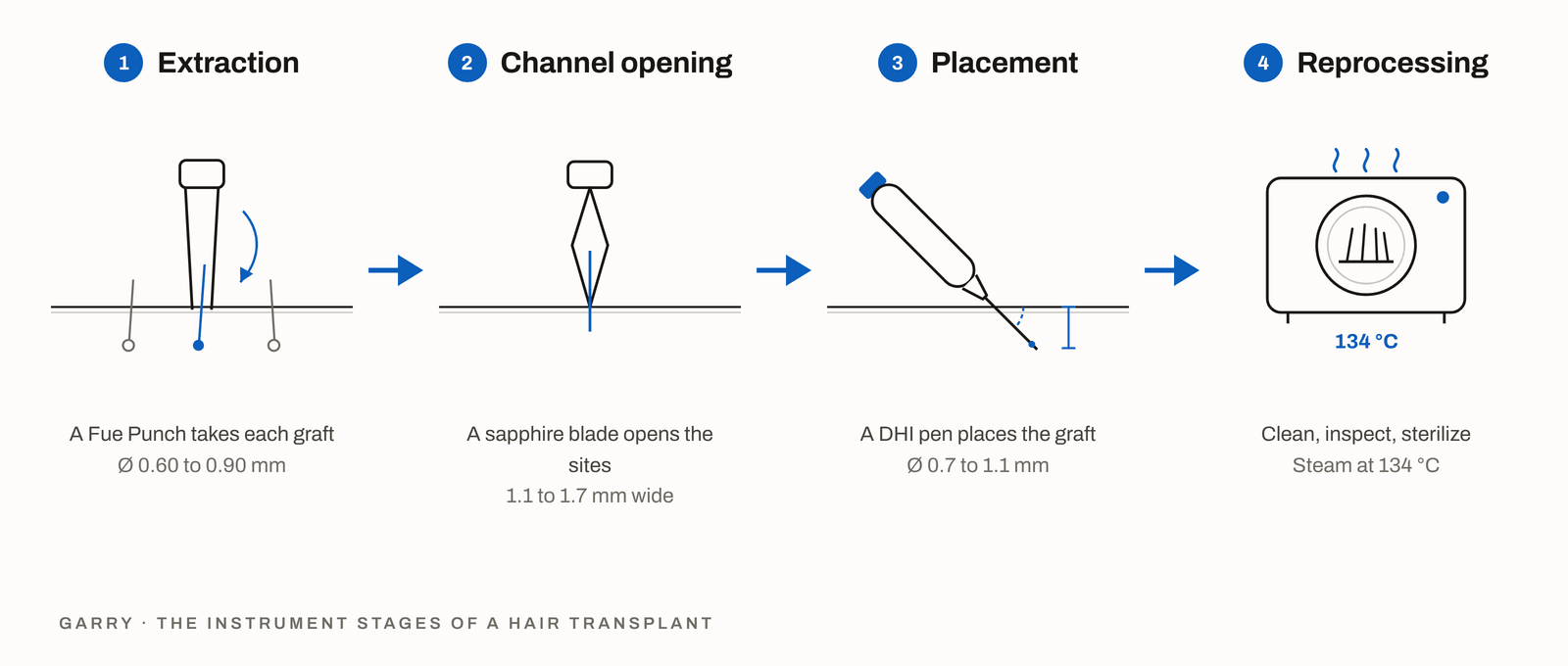
The 4 stages and the tool for each one
A hair transplant moves follicular units from the donor area to the recipient area. In FUE the grafts are taken one by one, and each stage of that work has its own instrument. The table sets them side by side.
| Stage | What happens | Garry instrument | Published sizes | Order codes |
|---|---|---|---|---|
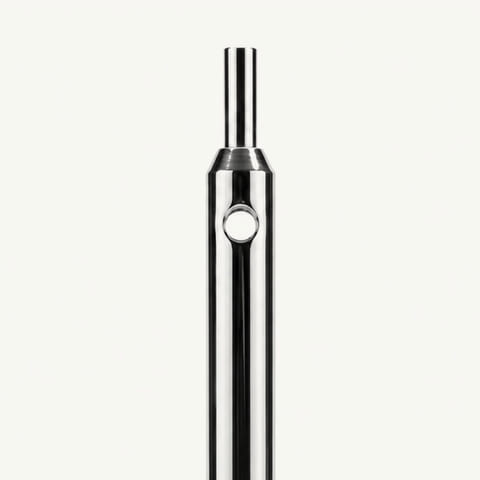
| Extraction | Each graft is scored and lifted from the donor area | Fue Punch | Ø 0.60 to 0.90 mm inner diameter, 5 working lengths | PCH-060-25 to PCH-090-50 |
| Extraction, no-shave | Grafts are taken with the hair left long | Long Hair Fue Punch | Ø 0.80, 0.85 and 0.90 mm, 4.0 mm working length | LPCH-080-40 to LPCH-090-40 |
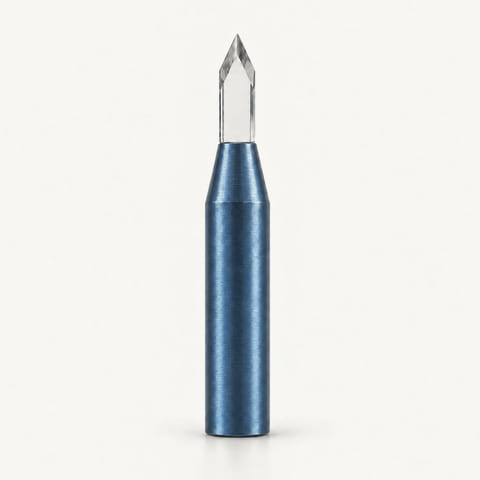
| Channel opening | Recipient sites are opened before placement | Sapphire Blade | 1.1 to 1.7 mm wide, 4 blade lengths | SF-110-40 to SF-170-55 |
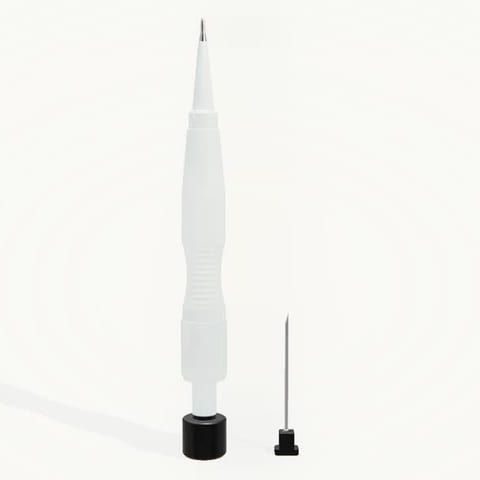
| Placement, DHI | The site is opened and the graft placed in one motion | DHI Implanter Pen and Needle | Ø 0.7 to 1.1 mm, one colour per size | DHI-PEN-070 to 110, DHI-TIP-070 to 110 |
| Reprocessing | Reusable instruments are cleaned, inspected and sterilized | Every Garry instrument | Supplied non-sterile, steam at 134 °C | By the instructions for use |
The first 3 stages are where the instrument choice shapes the work, so the sections below take them in order. Our guide to what a hair graft is explains how the graft caliber links the sizes of all 3.
Extraction tools, the punch
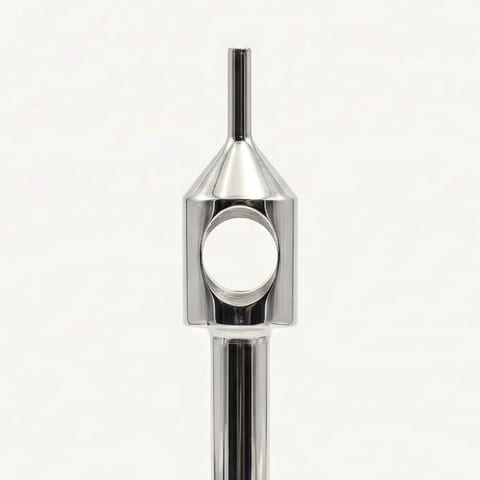
Extraction is the first stage and the punch is its instrument. A FUE punch is a small hollow cylinder with a cutting tip. It scores the skin around one follicular unit at a time, and the graft is then lifted out with forceps. The punch is used by hand or in a motorized system, and the choice between the 2 belongs to the clinic.
The size of a punch is 2 figures. The inner diameter is matched to the caliber of the grafts, and the working length is the part of the punch that enters the skin. The Garry Fue Punch is made in 7 inner diameters, Ø 0.60, 0.65, 0.70, 0.75, 0.80, 0.85 and 0.90 mm, each in 5 working lengths, 2.5, 3.0, 3.5, 4.0 and 5.0 mm, so 35 order codes from PCH-060-25 to PCH-090-50. The tip is serrated, the punch is crafted from Japanese Steel (Garry J-Steel), and each size is its own catalog entry, for example the Garry Fue Punch 0.8 mm - 4.0 mm, order code PCH-080-40. Our punch size guide explains how a diameter and a working length are chosen.
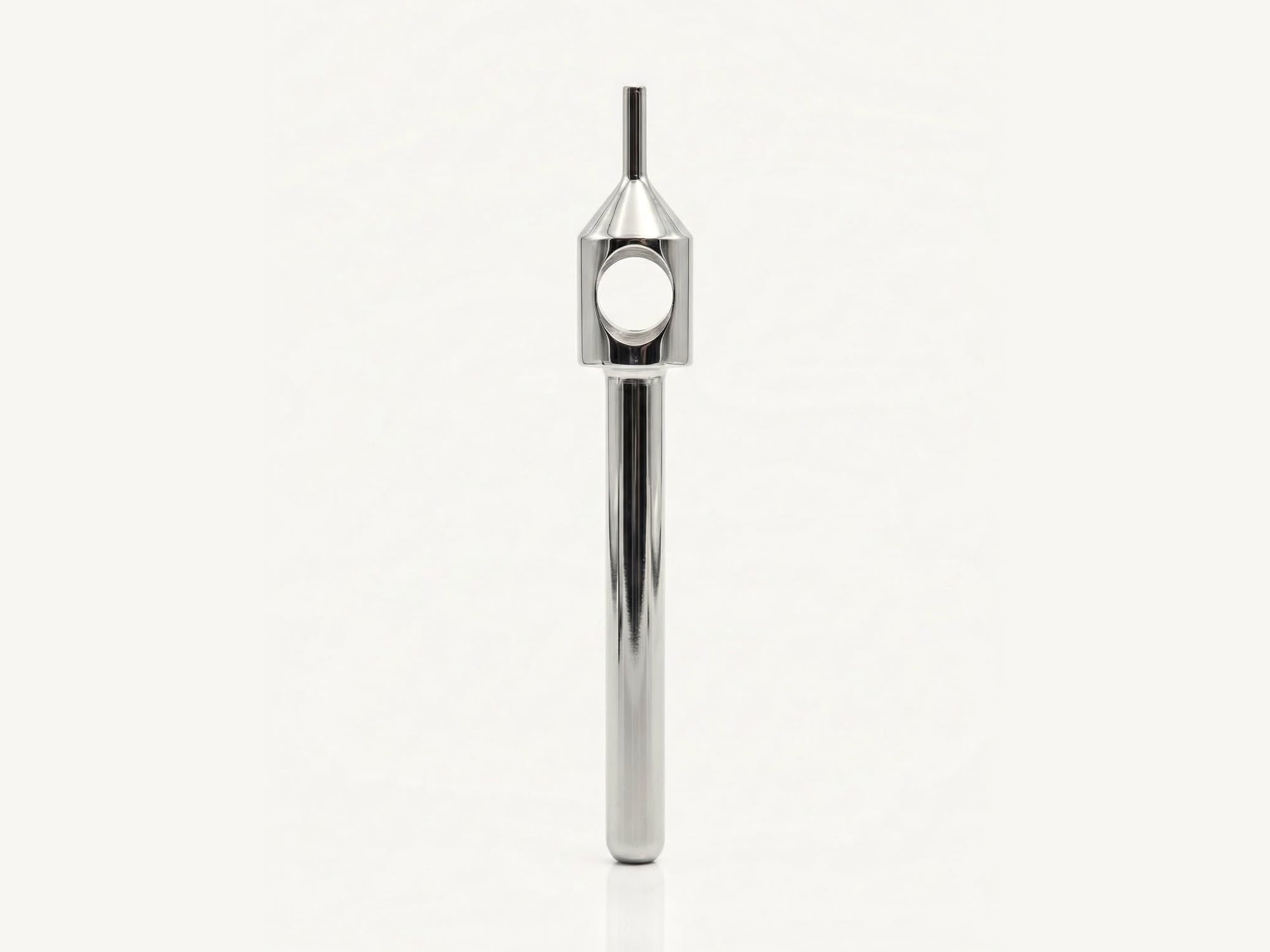
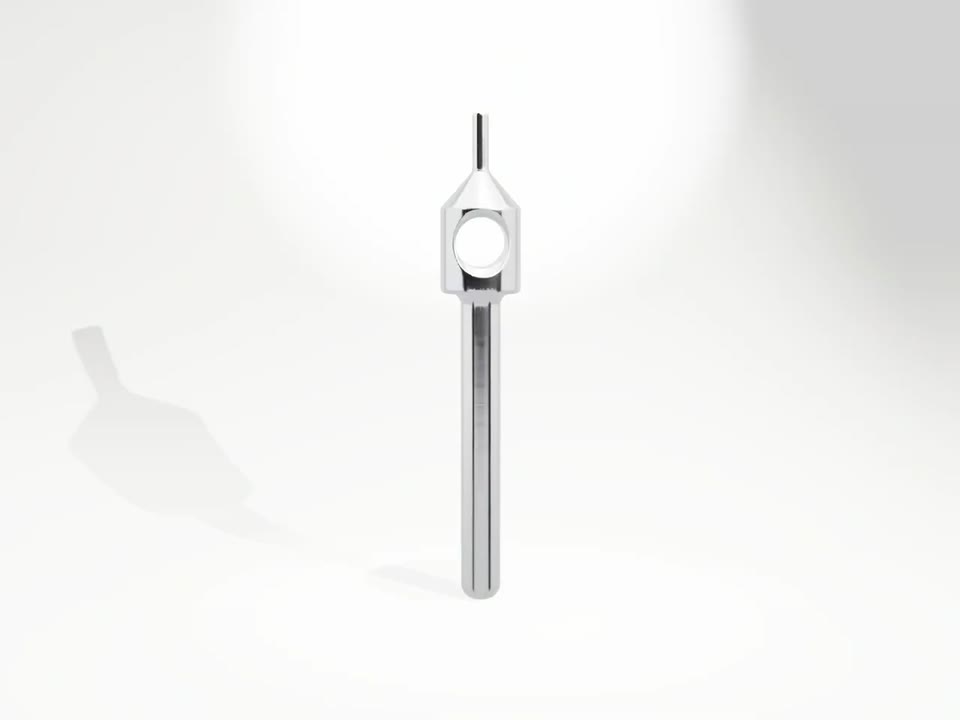
No-shave work needs a punch of its own. In long hair FUE the donor area is not shaved and each unit keeps its hair, so the hair shaft stays in the lumen of the punch during excision. The Garry Long Hair Fue Punch has a cutting tip designed for long hair and comes in 3 inner diameters, Ø 0.80, 0.85 and 0.90 mm, at a 4.0 mm working length, order codes LPCH-080-40, LPCH-085-40 and LPCH-090-40, for example the Garry Long Hair Fue Punch 0.85 mm.
For motorized extraction Garry also offers its own device, the Garry Smart Fue System. Its configuration, handpiece and accessories are confirmed on the quotation.
Channel opening tools, the blade
The second stage opens the recipient sites. In classic FUE the channels are opened before placement, and the grafts are then set into them. The blade that opens them is either a hardened steel blade or a blade ground from sapphire crystal, and our guide to sapphire and steel blades compares the 2 materials.
The Garry Sapphire Blade is made in 7 widths, 1.1 to 1.7 mm in steps of 0.1 mm, and every width comes in 4 blade lengths, 4.0, 4.5, 5.0 and 5.5 mm. That makes 28 order codes, from SF-110-40 to SF-170-55, where the first digits give the width and the last the blade length, as in the Garry Sapphire Blade 1.3 mm - 4.5 mm, order code SF-130-45. The width follows the graft caliber, and the clinic chooses the length. The blade is reusable and is designed for a total of up to 30,000 channel openings. Our guide to sapphire blade sizes explains the widths and the codes in full.
A sapphire blade is mounted in a blade holder, the handle that sets the exposed depth and gives the grip. The Garry range does not include blade holders, so the holder is sourced separately, and the fit of the blade in the holder a clinic uses is confirmed on the quotation.
Placement tools, the implanter pen or forceps
The third stage places the grafts, and there are 2 ways to do it.
Placement with forceps. In classic FUE the grafts are set into the channels opened at the second stage with fine forceps. The forceps are sourced from another supplier, since the Garry range does not include them.
Placement with an implanter pen. In DHI the pen opens the site and places the graft in one motion. A technician loads each graft into the hollow needle of the pen, the needle enters the skin, and the spring-loaded plunger releases the graft as the needle withdraws. Our guide to DHI hair transplantation follows the 3 steps of that motion.
The Garry DHI Implanter Pen is made of medical-grade steel with a spring-loaded plunger, a positive needle seat and an adjustable needle depth. It takes the Garry DHI Implanter Needle, crafted from Japanese Steel (Garry J-Steel). Both come in 5 sizes, Ø 0.7, 0.8, 0.9, 1.0 and 1.1 mm, each in one colour, yellow, blue, red, white and black, on the pen cap and on the needle hub. The order codes run from DHI-PEN-070 to DHI-PEN-110 for the pens and from DHI-TIP-070 to DHI-TIP-110 for the needles, for example the Garry DHI Implanter Pen 0.9 mm and its needle. The needle is reusable and is designed for up to 15,000 penetrations before the tip dulls, and replacement needles are ordered by their DHI-TIP code. The DHI implanter pen size guide explains the colours and the codes.
Reprocessing, the stage that keeps the tools in service
The fourth stage is not part of the procedure itself, but it decides how long the instruments stay in service. Every Garry instrument is supplied non-sterile and is reusable. Before the first use and between uses each one is cleaned, rinsed, dried, inspected and steam sterilized at 134 °C, following the clinic's validated protocol and the instructions for use. The instructions for use of each family are linked as a PDF on its family page.
A few habits protect the tools. Rinse punches and needles at the point of use before debris dries, clean them with a neutral-pH detergent and flush every lumen. Keep the edge of a sapphire blade away from metal and hard surfaces, and handle it by the mount. Sterilize the DHI pen disassembled so that steam reaches every surface. For lumened instruments such as punches and needles a prevacuum cycle is generally the appropriate choice, as our guide to autoclave cycles explains, and our guide to point-of-use care covers the first minutes after a session.
What a clinic sources from other suppliers
A complete instrument table holds more than the cutting and placing instruments. The Garry range covers the 4 product families above and the Garry Smart Fue System. The items below are part of a typical hair transplant setup, and a clinic sources them from other suppliers.
| Item | Stage | Purpose |
|---|---|---|
| Fine forceps | Extraction and placement | Lifting grafts out and setting them into channels |
| Blade holder | Channel opening | Holding the blade and setting the exposed depth |
| Magnification loupes | Every stage | Close work at the donor and recipient areas |
| Stereo microscope | Graft preparation | Sorting and trimming grafts by caliber |
| Graft holding dishes and solution | Graft preparation | Keeping grafts in their holding medium until placement |
| Ultrasonic cleaner | Reprocessing | Cleaning instruments before sterilization |
| Steam autoclave | Reprocessing | Sterilizing reusable instruments |
The fit between these items and the Garry instruments is confirmed in writing where it matters, for example a blade holder for the Sapphire Blade. The questions on buying from Garry list what the published range includes.
Building a starter set from order codes
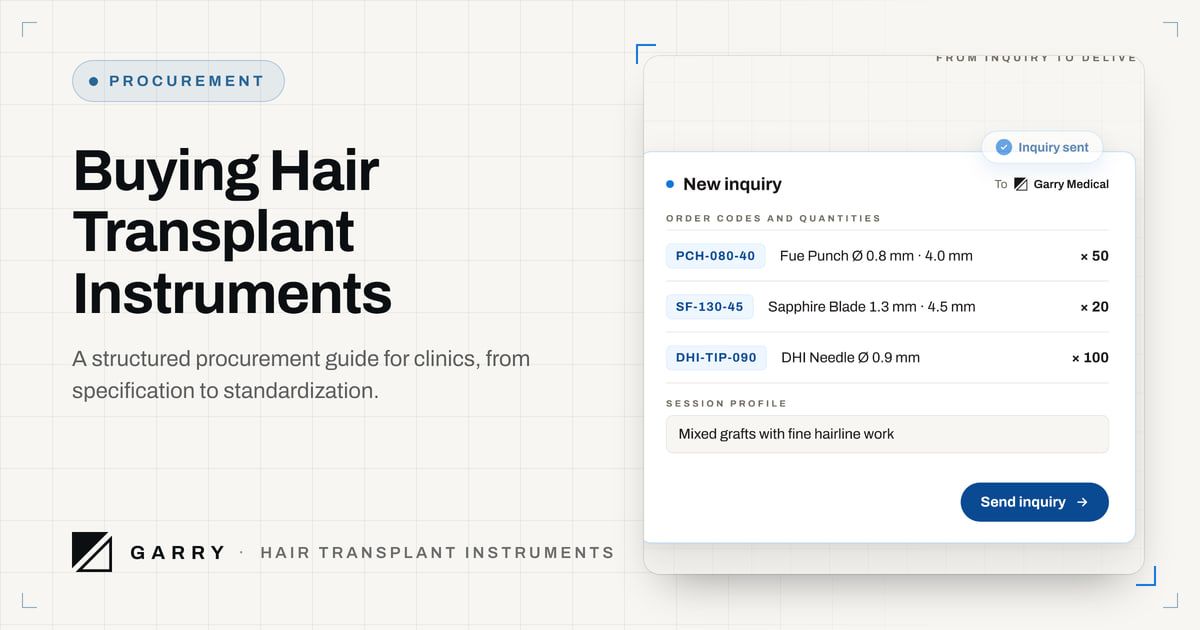
Every published size has its own order code, so a starter set can be written as a list of codes. The example below shows how a clinic could set out a first order for FUE with sapphire channel opening and DHI placement. It is an example of the format and not a recommendation, since the sizes follow the clinic's own graft calibers and the plan of its surgeons.
| Instrument | Example order codes | What the choice follows |
|---|---|---|
| Fue Punch | PCH-070-40, PCH-080-40, PCH-090-40 | The graft calibers of the donor area and the working length |
| Long Hair Fue Punch | LPCH-085-40 | No-shave cases |
| Sapphire Blade | SF-120-45, SF-130-45, SF-140-45 | The graft calibers and the blade length the surgeon uses |
| DHI Implanter Pen | DHI-PEN-080, DHI-PEN-090, DHI-PEN-100 | The graft calibers placed by DHI |
| DHI Implanter Needle | DHI-TIP-080, DHI-TIP-090, DHI-TIP-100 | One needle per pen size, plus replacement needles |
A clinic typically runs 2 or 3 sizes of each instrument side by side, because a real case places a range of graft calibers. Ordering by code keeps reorders simple, because each code refers to one defined specification. Our clinic procurement guide explains how to plan quantities and reorders, and the online catalog lists every size and order code on one page.
Questions clinics ask about hair transplant tools
What tools are used in a hair transplant? A FUE procedure uses a punch for extraction, a blade for channel opening, forceps or an implanter pen for placement, and the cleaning and sterilization equipment for reprocessing. Around them sit magnification, a microscope for graft sorting and graft holding dishes.
Which hair transplant tools are in the Garry range? The Garry range is the Fue Punch, the Long Hair Fue Punch, the Sapphire Blade and the DHI Implanter Pen and Needle, and the Garry Smart Fue System. Forceps, blade holders, microscopes and autoclaves are not part of the range.
Are Garry instruments single-use? No. Every Garry instrument is reusable, is supplied non-sterile and is steam sterilized at 134 °C before each use. The Sapphire Blade is designed for a total of up to 30,000 channel openings and the DHI needle for up to 15,000 penetrations.
Can one order cover every stage? Yes. A quote request can list any mix of punches, blades, pens and needles by order code, each with its own quantity, and what each quoted line includes is stated on the quotation.
Ordering hair transplant tools from Garry
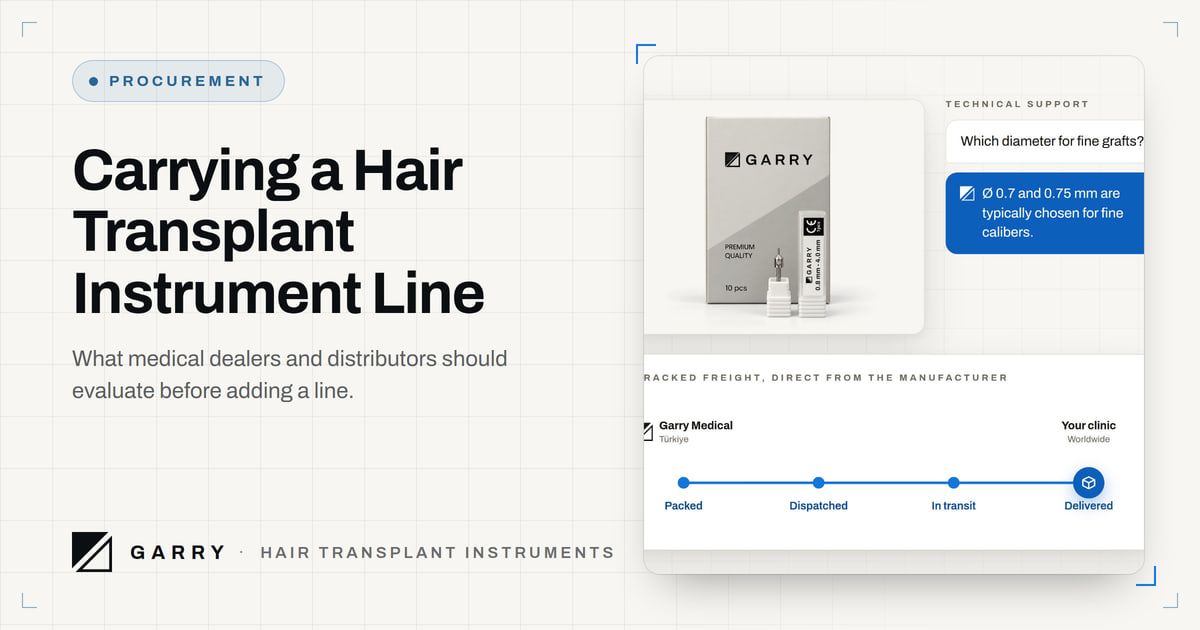
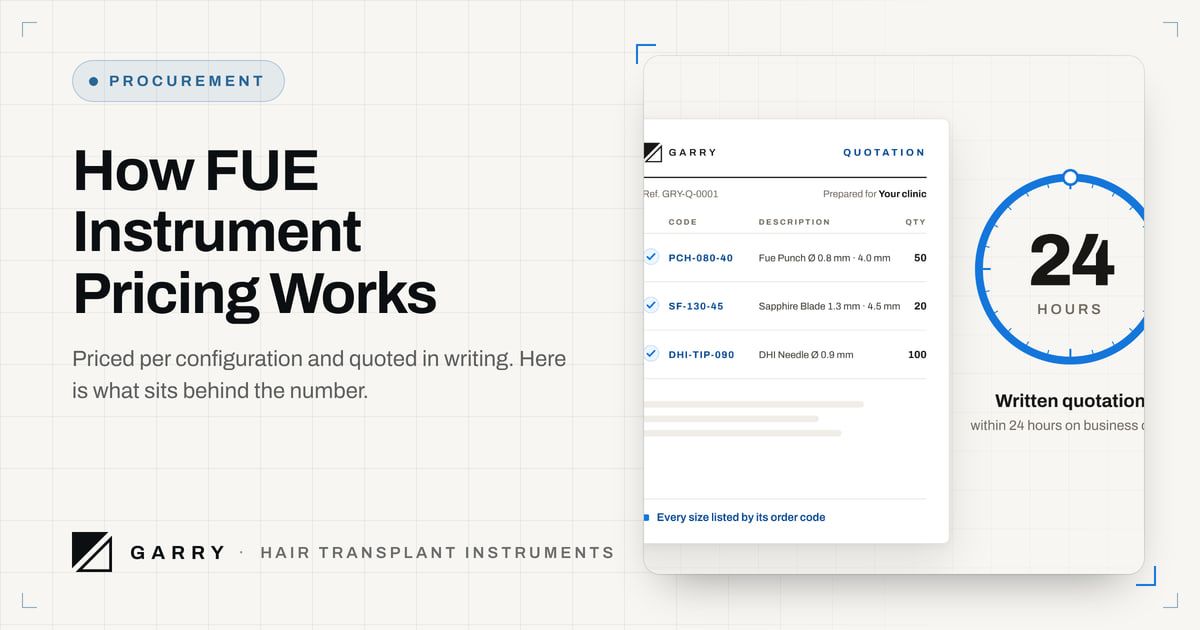
Send the order codes and quantities you need, or your procedure type and graft mix, through the contact page, and we answer in writing within 24 hours on business days, with a suggested starting set where you ask for one. Pricing is provided by quotation and is not published on the public site, and the minimum order per code, the lead time and the shipping terms are confirmed on the quotation. The instruments are supplied direct from the manufacturer in Türkiye, with no importer in between, the full range is on the instruments page, and distributors who want to carry the line can apply for a dealer account.